
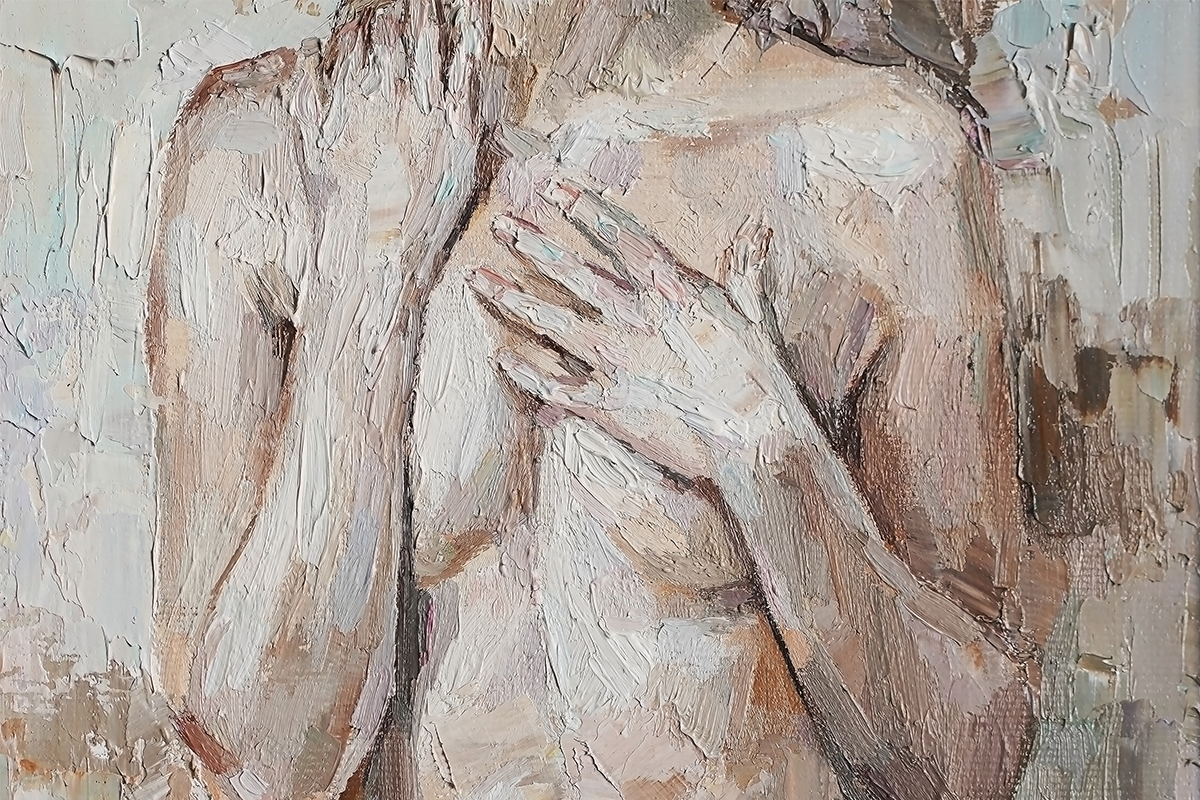
“Rapunzel! Rapunzel!” Speaks from lips forming in elderly elbow creases. “Where is this Rapunzel!?” Slices the skin on my eyes, taking me from what will always, now, have been dreamt.
My hand crawls the bedside table until it touches something cold. I pull the lamp cord. The apartment shines. I pull it again. And again. The room taking turns catching fire and hiding hell.
“Won’t you let your hair down?” He shouts, “Beautiful waves, I’ll climb!” His words, deployed, carry out his fantasy. Through my window, climbing the midnight air, then scaling my hair.
I continue orchestrating this beating darkness, saying ‘N-O’ in Morse code, to him, in the courtyard, below.
He falls quiet. I concentrate on the clicking sounds of the cord in my fingers. I close my eyes and master its fluctuations under that gauze.
Understanding and laughing, he replies, “… Know!… I am too starved!” I open my eyes. I can tell in his cadence there is a whole thought to come. “Too weak!…” He pauses. I let go of the cord. Get up. Out of bed. To be sitting like a whisper under the open window. “To accept this defeat, my love!” He shouts, “–Too weak… I’ll note it as a draw!” His feet scrape the ground and echo. “Draw!” He howls into the caverns of Paris. Then ‘D-R-A-W’ in Morse code. Pausing and repeating. “La la la, lu, la la, la la!” I can feel the cool breeze carrying his la’s, skimming my scalp on entering the shadowed shapes of my bedroom. See, charm is the ability to be both chaos and kindness, without the ability to abstain either.
I reach up with my hand and shut the window. Tug and shimmy the curtains, making waves from its hem to its hoops, ‘till they’re both in the centre. I get back into bed. His muffled, far away la’s, putting a plaster on my eyes and putting me back where I was.
Nearer to morning, my eyes open of their own will. Filtered through curtains, the night paints the apartment in darkened blues. I sense an approaching thought. Akin to elderflower in water, only half visible. Like it’s laced into rain and crashing on the ground, but there’s also damp grass and the fact that aromas and thoughts come so quickly you can’t tell how long it’s been there. Or, if it’s been there a while, and only just been noticed. Dr. Graverton said best not to open all doors and windows. Cut these thoughts loose. He made me repeat that ‘the past is the past and stays that way.’ So’s must not linger, or may do something clinically preposterous, again.
Does seem a notably dark night tonight. The courtyard’s streetlamp must be dim and hunch-backed. At its highest point, it must’ve rose to touch the sun, like a knife into an egg’s yolk. Like a child’s hands refracting into a sunlit pond. Hands able to escape with and grip a tiny piece of sunshine for all of time. Perhaps, long ago, raising its ember high, with boyish pride, at the sky, fidgeting to be chased.
Alas, the streetlamp has been eternally pondering the milk-white circle above. Waiting and waiting. Until, tiredly curving its neck and facing down from the sky.
It is a sad opera that happens in the background all the time. Its great love and ode will soon rise. The sun will spread itself wide, and the streetlamp’s light, at once, in a flash, becomes a drop in an ocean of home. Too quick for the streetlamp to see, hide, not be alone. To go giggling behind buildings and have the sun chase it down roads.
Hokum, I s’pose. To see the world in words. But harmless, all the same.
The doorbell rings. I lift the duvet. Adorn, and pin a dressing gown in its midriff with my clenched fist. It kisses the doorway to the living room and misses the leather of the settee, dipped and scored in silver. I stitch a writhing strand of hair into the sweat on my forehead, and feather its looseness behind my ear, and open the door.
“Bonsoir,” I say. My eyes developing color in the world.
“Bonjour,” he corrects, “la couturière Lanvin arrive dans une heure. D’accord?”
“… Bien sûr,” I reply. His tunic, with buttons like golden bullets, flying from the middle of his waist to either shoulder. Purely decorative buttons. Too young to have seen it.
“Très impressionnante, Madame Elschild,” he teases, “you understand?” The summer is sinking into his young skin, enclaves of sweating red within deserts of health.
I shrug. “It’s not my husband, is it?”
“Non.”
“Then sure.”
“… Your husband was here last night.”
“Drunk?” I ask, taking part in one of the doorway’s brief plays.
“Oui… Lots of talking. Said for you to let your hair out of the window. And he will climb… Rapunzel.”
“Did you laugh, Pierre?”
“Non.”
“Better not had,” I warn.
His expressions go through a puberty of changes, all briefly catching the small of the light: His peepers look physical, as he smiles, hard, curved, but flat, also. And the green in them is dark and almost passing for brown. His smile, under my gaze, is turning to embarrassment. Fantasizing about another moment with me — possibly. Or a simpler moment without me — maybe. Or the most desired and relaxing of both — for him; another moment, without me, but with me in it, and just him, alone.
“Thank you, Pierre.” I dismiss.
“Yes, of course,” The wind’s from his sails, “Sorry.”
I hum. He shuts the door. I see tangled silk on the floor and tie my gown. I make myself a martini with Italian vermouth, and without lemon. I take it to the bedroom, and then the bedroom’s wardrobe.
To the left and right, amboyna drawers and amboyna hanging spaces like honeycombs, incubate dresses, budding for their season. I place the glass of autumnal liquid on the pure white carpet of the dressing room and sit in the center of all the seasons, cross-legged. I take a deep swig of the martini.
The wardrobe was decorated by a previous guest. The wallpaper on the back wall, of a birthing rose, crowning red in stained but pale paint, always sang to me. Youngly stirring and opening its eye, the rose is still in dream. Too at peace to cry.
More words. Less enjoyable, these.
I will be more active today, I feel. I shan’t take the seasons through liquid. I shan’t hide myself in this room. I’ll leave the glass on the floor.
Nearing the window, the blonde is negotiating with the evening. Imagining behind me, a thick column of sun like a wide road — I pull the curtains apart.
The courtyard beneath is an empty yellow with breaths of blue, and the streetlamp is as black as a shadow, stretching in the morning sun. It displays no light, and it doesn’t look like it ran or hid at all. I squat, place my chin on the windowsill and slowly press my forehead on the glass. Hearing it in my ears or through the cold, on my brow.
The hotel, in all its pomp, is curved. Mine must be the only window shut, and the only window with a forehead pressed against its pane. A vibration and howl of distant music. Surely, what I am feeling on my brow and feeling in my ears. I open my window. Place my forehead into the new day. The wind pushes and pulls. The sun and I are early. The curtains are generally a frolicking white at this time of year. Pierre knocks on doors with them. The howling window’s mouth is biting, chewing and spitting back out, a deep black. Brief colors from within talk in between the breezes.
I enter the wardrobe. Line my mouth with the last of the vermouth. Dress. A pretty black, embroidered with falling petals of red velvet. Dashes of color; It’s good to be a mirror. The black breathes as I move. Fringes beyond my knees, smoking black and caressing softly my stride. I ring the doorbell. 136. Hearing only a curving trumpet sound curving off the door, I knock with my knuckles. The music abrupts. I await.
A lady opens. Naked. Touching 50. A body delightful, but slack on the stomach and gams, and all over in truth, but beautiful, even just to be. Spots of paint glint and catch the world on her skin.
“Oui?” She asks.
“I heard your music. I live at 1-0-9.” I see beyond her waist and the reddening bulb of her right shoulder, the dark curtain tousling in the frame of her window. The breeze touching me and scampering down the corridor.
“Ah! Come.” She says.
I step inward, catching a glimpse of another woman. Her torso and legs lying naked on silk. Her face obstructed by the door and a large pillow over her stomach.
“Ah, non.” The spotted lady says, and hurries herself and I, out of the apartment.
She shuts the door behind us. Slips passed me. I can feel the warmth of her apartment on my back. I can hear behind me the curving music start again.
“You are beautiful,” She says, looks down and fingernails at a flake of red that’s on her thigh. Her eyes deliberately away from mine, she says, “You are the most beautiful woman I have ever seen, to look at…” She looks up. I don’t speak. I’m unsure if my face has an expression. Not a thought I often consider. “Now, we go in.” She gestures.
She enters. I enter. Her fading red shoulders bobbing and shrinking, like outward-going buoys towards an easel and stool. The jazz is short sounds. So loud it’s treating my eardrums like soil, to get to some oil. She is weaving between knee-high sculptures. Without plinths, they are stood on messy coasters of newspaper rippings, lapping like waves underneath the Colossus of Rhodes-like sculptures. Crumbs of clay are discarded in the waves, like tiny boats, or rocks, or unpainted lighthouses. She reaches her stool and sits.
Some feet right of the canvas, the pillowed lady lays. She’s a strong jaw, hair the color of ripe peach skin, and nods to me, coldly.
Some further feet right, a quartet of male brass players are playing the chaos, in suits, when all else is naked. All but for them and the walls: hundreds of paintbrushes painted names in black, on white walls, and in red, dates are underneath.
Josephine Baker
1931.
“Ah, mes poussins!” The painter shouts to the band, lowering her flat palm from her chest to her waist. The band stops momentarily. Chat quickly. And begin Mary’s Silver Lining song, without enthusiasm or words.
The painter wants me to sit. A singular wooden seat nearer the front door, dashed with cushioned lumps of black and white, on the bum, and on the wooden armrests. I sit. The sculptures could be knee-high chess pieces between the painter and me. I place my legs with care.
She takes an already-in-use paintbrush in her fingertips, “Your name, darling?”
“Corina,” I say, “And yours?”
“Janice… Soft J.”
I lean to my left. The painting looks to be complete. The rippling of the watery silk below the peach-haired girl and the mountainous island of the pillow above blend into one. Her limbs, detailed and protruding from the rippling, are immaculately decapitated. Wild. Gorgeous. Janice paints the final specifics.
The model dresses. She looks at the painting and looks happily, taking a payment and leaving her portrait on the easel. Nodding to me as she goes.
The band lowers their instruments to their waists. Janice’s pale eyes begin to peruse my body, as if my body has eyes and is peering back. Her neck pivots, and her eyes soundlessly come visit the color in mine. Her expression is still. Her pupils take a deep breath. If the world were simpler, I’d ask if my body’s eyes are sweeter than mine.
“Okay… You are ready?”
“I’m sorry?”
“To be painted?”
“… Sure. With the pillow?” I point to where the pillowed lady was splayed.
“Non. Just there.”
“Naked?” I didn’t consider why I’m in the room, and now this feels like why.
“If you would like this?”
I take off my dress and leave it and all other clothes in a rough pile between her and me. And sit again, in the chair. Its coldness doesn’t move. I contort myself, so only one of my thighs is touching its surface. She leans her canvas of the bruised-peach-girl against a wall. Picks up another and a new palette and sits on her stool. The band begins to play similarly to earlier. She looks engrossed in the circles forming on her palette. Her eyes are wide; Her brow becomes broken, and her eyes shrink.
“Ah, tout le temps! Joue-la!” She shouts at the band. “Joue-la!! Joue-la!”
The band looks to me. One bops his head several times. The instruments begin to hum and crawl over one another, then the softest and most gorgeously empty tune forms, with pauses and air everywhere. I lean back in the chair and let my arms rest on the padded black-and-white. She puts down her palette and begins sketching me with long, thin black pencils in a notebook. Looking at me, then looking to her lap. Looking at me, in color. Looking at me in lead, on paper. Looking at me on the chair that’s touching every hue of my skin, slowly becoming the temperature of me. The notebook, too, possibly. I feel everywhere in this room.
“I confess to having known of you, Mrs. Elschild.”
“Yes?” I ask.
“Married to a priest before this famous love?”
“I am certain his eyes, looking downwards, would look downwards upon me now.”
“Being painted, like so?”
“All of it.”
“Ah…”
The eyes of the room watch in their different shades: of grass, sky and bark. Within this nature, this zoo, I’ll wander into my own.
A thought I’ve often had, — maybe I don’t age. Just walk further from how I was when I was young.
Suppose we’re not meant to leave our homes? Animals don’t, and we are animals. Possibly the allure is to switch creatures, painful as it is. The travelers learn strangely, maybe, that leaving home makes you learn things that you should not. Live a life that is not yours.
I wouldn’t be marriable in Lewes, with my known and planned future having become more of an inanimate object than half of me. And the whole of me seen as the rib of a dead priest. Possibly wanted by the husbands of friends — quietly and alone, in their sheds. But they would know. And their fantasies would have to have what happened involved– possibly saving me from a life in black. Black, worn in energy, in New York, L.A, Berlin or Paris. Here it can hide like a known conspiracy, in plain all-knowing sight, even when naked — naked and documented.
The sun is going down. Going down on statues, on easel, on Janice and her band, and on me. I am tiring. She ushers me to the easel and shows me the painting. A different reality to the pillowed lady’s portrait. It looks strange and not exactly mirroring, but also, does appear to be me, in some manner.
“You enjoy?” she asks.
“It is pretty.”
“I have missed you, I think. But perhaps not?”
“Not.” I say.
“You enjoy being painted?”
I don’t speak.
“Would you like?” She gestures to the easel.
“Ah, no… Thank you.”
“No?”
“Yes. It is nice but…”
“Oui! D’accord.” She shrugs.
I get dressed. Leave for my apartment.
I sleep for 21 hours and wake to evening.
The toilet is an especially cold and true place to experience thoughts. My blood has begun, and always reminds me that ‘the past is the past and stays that way.’ It is true. But sometimes the present just doesn’t feel like enough. Lacks depth and immediate feeling. Dr. Graverton wouldn’t prescribe these thoughts.
I sit on the bedroom floor. Through the curtains’ gap, it is brighter this evening. A singular pinstripe runs along my lap as I gaze into the wardrobe.
Tonight, the rose doesn’t so much look like it’s birthing, crowning, stirring, or opening its eye. It doesn’t look like it’s still in dream, too weak, or too at peace to take it all in. It looks simply to have been created by an artist and later, a printing press. I gulp after that thought. Possibly, I was just a printing press. Taking measurements from nature and she got it wrong, by accident, or by an attempt for something new.
I lie on my back and intercept the streetlamp’s line of light, beckoning me, on the bedroom floor. Balancing it on the bridge of my nose, it kicks up particles, then lies painlessly on the center of my chest, and continues to my stomach. I can feel it at every point, and where my legs are parted, it returns to the floor where it began. I am a short stop on its journey, possibly.
Not a memory swam through often. Collecting dust. Untampered. Clean hospital walls. Soldiers with missing legs, on beds, either side of mine. Every doctor, old, with ropey forearms and smashed-glass elbows. Me, asking the nurse to telegram my priest. I begin, I think, to tamper. So, I am a printing press. And so, am not an artist. And the light was just passing through. Not made by me. He just passed through — that one day. Just one day. Lying with me before returning.
Clear, it wells, spills and runs cold towards my ears, and I can feel sharply the air touching it, or it, touching the air, and my cheeks warming, reddening, and becoming hills with ravines of happy wrinkles. I feel almost as weak as him. I feel free, weak and happy. That the overabundance of the world could cause me to stay in this lying forever and become stone. However, a statue with a happy smile. How rare.
I let my head relax to one side and my chin rest on my shoulder.
I spot a note stapled to the top of a newspaper, with a suggested page number. I ring for Pierre.
“What’s this, kiddo?”
“Ah, yes. The manager put it. Shall I read?” His fleshy red tunic with artillery of gold. I usher him to the silver settee. We sit next to one another. “You did not meet, errm,” I hand him the paper. He holds it in his hands.
“Please.” I smile.
“It is a painting by Coudaire?” He says, turning the pages.
“Janice.”
“Oui, Janice. Musique. Chambre 1.3.6…”
“It’s been a while since I’ve been in the paper,” I say.
“Hmm.” He agrees, knowingly.
He finds and shows me the picture without its colors, not in lead but pressed with ink. My famous name is large and emboldened. Janice, in her apartment, standing by the easel, presenting it, “It is you, correct?” He asks. Sweat escaping his gelled back hair.
“Yes,” I say.
“You posed?” he asks.
“Yes,” I answer. His breath stutters.
In his head, he begins to read the article. Fixed to the words, stiff-necked. I feel young and naïve for a moment. My eyes drift, scanning the textures of the living room. The movements, smooth. The linings of my eyelids, soft, or tired, maybe. Possibly my eyes are just expressing what is deeper. The warmth in my center, my chest, my stomach and between my legs, especially. “What does it say?”
“It is…” His brow is soft with lines as he hurries through the last words.
“Pierre, it is okay,” I say, delicately.
“Er, that you have not left the hotel in months.” He recounts.
“How do they know that?”
“I do not know.”
“It’s fine.” He looks away, “Pierre, eyes on my eyes.” I lean forward to guide his into mine.
“We do not talk. Is the truth, Miss, I talk… Truthfully.”
“Honestly?”
“Oui, yes.”
“Continue.”
He breaths in, the air whistling between his lips, “And… It says that there is emotion there.”
“Okay…”
“And says no longer an ‘it girl.’ Looks… Rotting? — Is that correct?”
“Yes, I suppose.”
“Not, is that correct, miss–”
“–Just carry on, Pierre.”
“And the death of the flapper.”
“Okay.”
“This is the final words.”
“Okay,” I scoff. Relax my neck on the sloped apex of the settee, “I don’t know whether to care, or not.” An ice block forms in my esophagus. The air moving through it colder, “Unattractive…”
He leans forward, his neck twisting, “is just a painting.” I wonder what he’s seeing through his eyes. It is stupid to care, but it hits me unintelligently that she didn’t ask for my name on the wall. He leans back. I see his warped reflection looking up to the sky. Slicked and hardened curls of light brown hair made curlier in the silver leather. I imagine he is in a moment of his own. In his own life. We kiss. Feel his young, bristling mustache sting my lips.
“You are still new, gorgeous to me.” He says now we’re done, with his hand still there, on the curve of my back.
“Is the painting still in Janice’s apartment? Where is the painting?” I ask.
“Uh, possible.”
“We are going there. It is me. It is mine.”
“Yes.” He nods.
She opens the door. Clothed.
“Where is it?”
She calmly tells me where. I walk through the sculptures, hoping to accidentally brush one, to brush it along the floor like smeared dirt. I pick up the painting. Hold it to the light. Nakedly, both thighs hissing red, its eyes look vacantly through me. Passed me. Over my shoulder.
“This thing is a lie,” I say.
“It is.” She declares, walking the room, a tall black feather in her hair, obscuring Pierre’s eyes, behind her. “It is a painting. It is not you. Is ‘a lie.’ Would you like a drink, Corina?.. Pierre?”
I can feel Pierre looking at me whilst I look at the easel, “I, I am still working. And too young, madame.” She begins to giggle.
“Did you create it savagely?” I interrupt, “with hate for me?”
“Non.” She shrugs, “I just paint. You said was pretty.” She opens the head of an elephant, its tusks in her palm. Taking a glass and a bottle of eau de vie from within.
“I say things all the time to be cordial. I’d have thought you’d do the same with your colors.”
“What? Pardon? It will be famous art, sounds like.” She pours herself a drink.
“I am human. Not this dead, timeless body.” She puts the bottle back.
“Can be more than human?” She suggests gently, spreading her fingers and letting the elephant’s head slam shut. The sound rings through the room.
I concentrate on my voice, keeping it level, “A dead one, it appears. Rotting. It says rotting.”
“…”
“Pierre.” I command.
“… Décomposition. Le Populaire?” He says.
“Ah..” She sighs, “They should not say. I do not see – Do you see? ‘Rotting’?” She motions her glass at me or the painting.
“Of course not,” Pierre says.
“… I will rot, when, and how, I like. I am taking this.”
“Sorry?…” She asks, before magically finding words, “You cannot take. Hide. It is the world’s. It is important.”
“It’s mine,” I say sternly.
She stands, sterner.
“Do not stand as if it is more important than you!” I puncture the silence and the faux expression she had on her face. “… Why is the inside of my legs red?” I point to it, “Why is it red there?!! Why so horridly? You’re a woman, aren’t you? Why is it that red?”
“Cos legs were red?”
I feel my face on fire, warm and pig coloured. “Still.”
“… Still??” Her face contorts.
The bottom fifth of my vision becomes sparkling. My expression doesn’t change. I feel my tongue in my mouth touching both my gums. “… That’s a horrible red,” my voice becomes delicate, “horrible… It wasn’t. It should be sunshiny.” I look to the sky, blinking. The ceiling blinks back without emotion.
I kick one of the statues to the floor, its head snaps off and rolls. All three look at me, the disembowel cherub’s head coming to a stop and looking up.
She breathes through her nose, “That was my son.”
“Mine, too.”
The corridors curve slowly as if not unique at all. The plaster bordering the doors – officious, grand, and aged to the hue of urine.
We enter my apartment. I take pillows from the settee and put them to the floor. “Miss?” Pierre asks. The painting from his hands. Some matches from the kitchen.
Let the whole thing alight.
“No! No! Merde! Merde!”
I take his forearm in my palm, stand between him and the crackling sounds, “don’t leave.” Forming with my eyebrows – softly risen, and smile – cutely plateau’d, a doughy, fleeting moment, as if life becomes simple and passive after true love. He nods, agrees, and breaths, his face in caprice — sadly innocent but intrigued. I can see that his mother and father are very different people.
I turn. Our shoulders aligned, touching lightly and facing the young flames. His forearm’s veins are pumping in my gripped fingers. The fire illuminating his profile, his eyes, flat, young and green, reflecting gold. The painting is cut by flames and is gone. So quick. So very quick. The heat from the growing fire passes through us, silently. Copacetic.
“Is this the kind of thing an ‘it girl’ might do, Pierre?” He turns and looks at me. It’s an inhumane stare. I look to the fire, “can leave, darling.” He begins to “telephone my husband,” his footsteps quickening. The apartment door opening, “that I hope to see him–!” and slamming shut. “… In the next.” I say and it stings.
I kick off my pumps into the fire and see it in the flames. My darling’s chubby little hands stealing sunshine from my elixir of youth. Not my, or his, fault, that he took too little, or too much. The room thickening with black smog. And that lamppost waits in the dark of my mind every morning. Eviscerating when eyelids break the day. I close my eyes. See him in my arms. Dr. Graverton was wrong. The passed aren’t solely in the past. Relationships don’t ever end. They just change. Changing every day.
I awake. Hear his breathing. A single rectangle of folded bedsheet over my crotch. A white wrapping of bondage suffocating my breasts and cuts of the same silk, handcuffing me to silver banisters.
“Morning, my dumb dora,” he sighs with relief. His hushed brown eyes on me, softer than ever, older than ever, stained red and purple with lack of sleep. His lines shape his face differently than evolution’s intent. Always been more obvious to tell with him that he wasn’t meant to be this happy. He pulls himself up to sit normally on the chair, “apparently, as hard as it must be, you should not talk too much. And impossible as it is, shouldn’t laugh neither. I know opening your eyes — seeing me, and hearing you can only operate your eyes and ears must be horrible…” His eyes lose their lines and fall young and guilty, and serious in the way men and children are, “I’m sorry. I failed you into this state. I’ll try harder to be nicer,” he says, his lines reappearing, “and not to make you laugh so much… Which appears to be working.”
My throat stings, and he smiles, knowing that if it weren’t for the smoke in there, he’d have bathed in my laugh. I wish I could, and I will, tell him of the streetlamp and the light. It is nice, his voice. This is the first time someone has talked to me properly — honestly, with history, warmth and character, and in boundless English, in so very long. My famous love. My third and most enduring in this plane. It’ll be easier with him knowing. Knowing it all and knowing every prior change must live within me. And how explored or ignored is a horrible choice. But is the ability to see. To see my own soul. I will offer him the same view. He finds an unburnt piece of skin and kisses my veins. It feels like the first time I’ve been touched and then like a past life, resurfacing. He offers his thumb near my palm to suggest holding hands in a way that won’t hurt. This future, from this hospital bed, has an immediate feeling. Just as when I was last in a hospital bed. Possibly, I’ll just hold the hands of both and live like a bridge for a while.


